Italy in a Campervan with Kids- TOP TIPS
Travelling with kids can be a challenge. Especially the journey! But what if you could make the journey part of the experience?
When we first started planning our travels, a campervan trip was high up on my bucket list. We had previously travelled to Italy pre kids for a short weekend in Milan back when you could get a Ryanair flight for £9.99!
We were seriously impressed, taking the short train ride to lake Como and eating the most delicious food. I was pretty keen to return.

Now, we have mentioned previously that car travel was our kids favourite battleground so why would we choose to base our trip on travelling in a campervan for the whole time?
It’s a good question but let me sell it to you.
Picture yourself navigating winding mountain roads, pulling up at a vineyard for the night, and waking to the sound of birdsong outside your window, and the best bit, you open the doors to the van and get outside!
Exploring Italy in a campervan was the perfect way to explore Northern Italy and the dolomites with the kids, allowing freedom to travel at our own pace.
You may need nerves of steel driving through the small villages or traversing the hairpin turns in the mountains but a campervan is an amazing way to explore Italy, no matter how big or small your budget.

Why hire a campervan in Italy with kids ?
Travelling in a campervan offers several advantages over other modes of travel. For one thing, it’s much more affordable than many other types of travel. A campervan rental can cost as little as €50 per day and includes insurance and basic amenities like bedding and cooking equipment.
Travelling in a campervan means:
- Freedom to explore: Stop whenever and wherever you like.
- Family-friendly comfort: No packing and unpacking at every stop—your bed and kitchen travel with you.
- Cost savings: Save money and eat in your camper, using fresh, local produce from Italian markets.
The challenges?
Yes, you’ll be living in close quarters, you might need to co-ordinate your movements around the van and no one is allowed to turn over in their sleep otherwise the whole van rocks but these are all minor things compared to where you can wake up!
Where to Hire a Campervan in Italy
Here are some rental companies.
- Indie Campers: Locations in Milan, Rome, and Venice. Their fleet includes compact 2-person vans like the VW California (from €60/£50/$65 per day in low season) and family models with bathrooms and kitchens (up to €150/£125/$160 per day in peak season). Airport and city-center pickups are available, and they offer one-way rentals for added flexibility.
- Anywhere Campers: Specialises in one-way rentals. Fully equipped motorhomes start at €80/£70/$85 per day. Their Fiat Ducato models include spacious sleeping areas and plenty of storage, ideal for families.
- McRent: Offers everything from small campervans to luxurious motorhomes. Prices start at around €100/£85/$105 per day. Pickup points include Florence, Venice, and Rome, and rentals come with insurance and essential equipment like kitchen kits.
- CamperDays: Transparent pricing and filters for van size and amenities. Rates range from €70/£60/$75 to €140/£120/$150 per day. Flexible cancellation policies too.
- Yescapa: Peer-to-peer rentals connecting you with local owners. Prices start at €50/£45/$55 per day. Options include retro vans and eco-friendly models. Check listings for specifics on layouts and features.
Each company provides photos, layouts, and descriptions on their websites. Be sure to compare sleeping arrangements, storage, and onboard amenities to find the right fit for your family.
Prices start at around €50 per day in the off-season, climbing to €150+ during peak times. Always book early if you’re travelling in summer or during school holidays.

Who we booked with
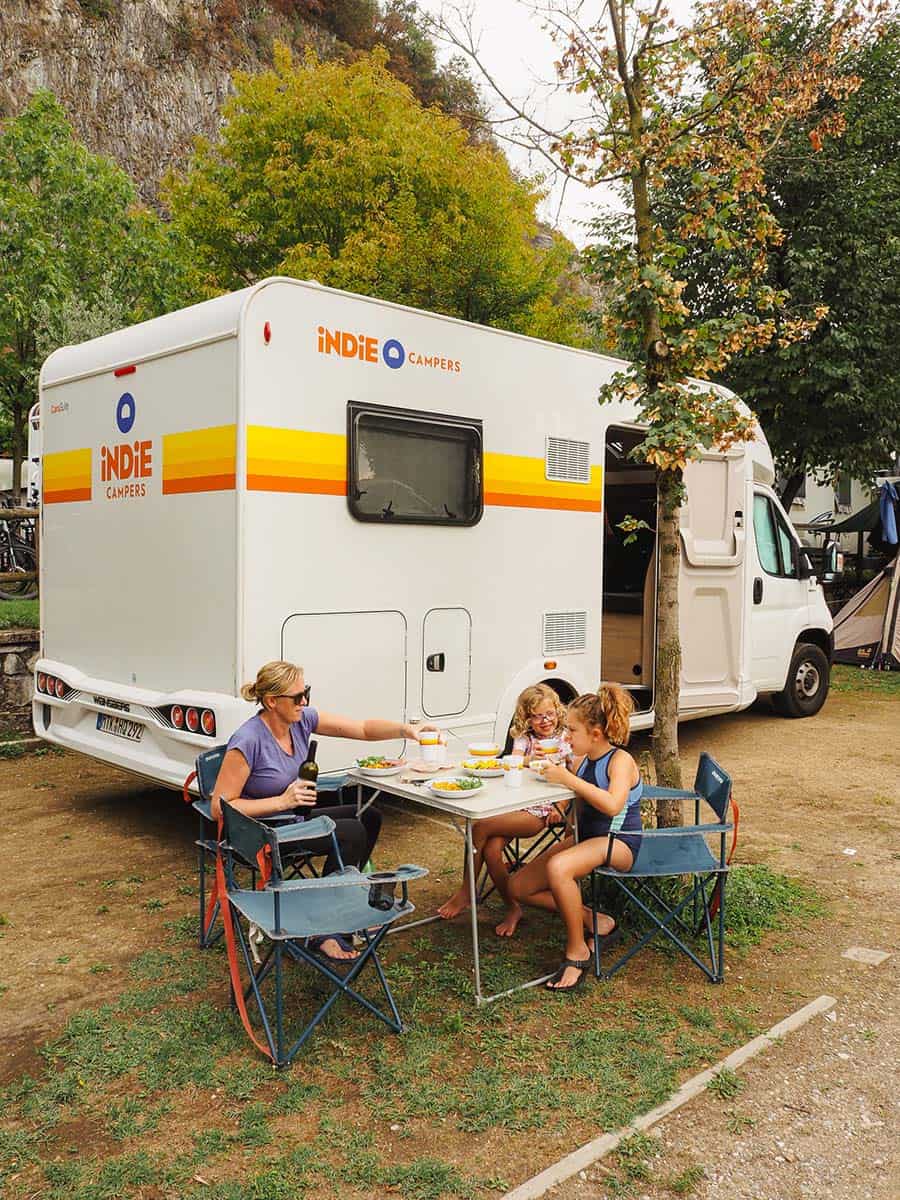
If you’re looking to hire a campervan for your Italian adventure, Indie Campers is a great option to consider. With locations in major cities like Rome, Milan, and Venice, you can easily pick up your campervan and hit the road.
We picked up our van in Milan and dropped it off in Venice. Indie Campers offers a range of different models to choose from, so you can find the perfect size and style for your needs.
We chose the Atlas 5 model which was spacious and had everything we needed. Their campervans are equipped with everything you need for a comfortable trip, with options to purchase additional equipment; including bedding, kitchen supplies, and even Wi-Fi in some models.
Plus, their prices are transparent and all-inclusive, so you won’t be hit with any surprise fees. And if you need any help along the way, their customer support team is available 24/7 to assist you.
What Type of Campervan to Hire with Kids
When choosing a campervan:
- Family size: Opt for a model with enough beds and storage space.
- Kitchen setup: A small kitchen makes life much easier for feeding a family.
- Toilet/shower: While not a must, having these on board makes things much easier although we never showered in the van. The campsites always had much better facilities.
- Child safety: Check for car seats or booster seat compatibility.
We hired the Atlas model in Italy and the Nomad model in Portugal. With two older kids, the Nomad was a bit of a squeeze for a month and we would opt for the bigger model on our next trip.
How Much Does It Cost to Rent a Campervan in Italy?
- Rental Costs:
- Off-season (November-March): €50-€70 per day
- Peak season (June-August): €100-€150 per day or more
- We paid €90 a day. There is an additional fee for a one way route.
- Extras:
- Bedding, kitchen supplies, GPS, and Wi-Fi are often available for an additional fee (around €5-€20 per day per item).
- This was enough for our trip which is included in our costs above.
- Fuel and Tolls:
- Fuel prices vary but average around €1.80-€2 per litre. Budget for tolls (handy calculator here), especially on major highways; costs can range from €10-€50 depending on your route.
- Campsite Fees:
- Campsites typically charge €20-€50 per night depending on location and facilities.
While at first glance, renting a campervan might seem expensive, it can often be more affordable than combining car rentals, hotels, and dining out every day, especially in Europe
Booking early (up to four months in advance) and traveling during the shoulder season can help reduce costs.
When to Visit Italy in a Campervan
The best time for a campervan trip depends on your what you are looking for. We are big fans of the shoulder season, weather is generally still good but crowds are beginning to disperse. Our trip in September was perfect
- Spring (April-June): Blossoming landscapes, mild weather, and fewer crowds.
- Summer (July-August): Best for mountain destinations like the Dolomites, though coastal areas can be crowded.
- Autumn (September-October): Harvest festivals, cooler weather, and stunning autumn colours.
- Winter (November-March): Off-season perks include empty roads and ski opportunities in northern Italy, though some campsites may close.
Top tip for hiring a campervan
Check the campervan- before you leave, check over the campervan, point any issues out and take pictures. Take it for a short drive to check breaks, lights etc too. Make sure you discuss any issues and document.
Where to stay in Italy with a campervan
Italy is a great destination for campervan travel, with plenty of options for where to park up for the night.
Campsites
One option is to stay at a designated campsite, which can offer amenities like showers, toilets, and electricity hookups. Some campsites even have pools, playgrounds, and restaurants on site, making them a great option for families.
Wild camping
Wild camping is technically illegal in Italy, but it’s sometimes tolerated in rural areas.
Apps like Park4Night, StayFree and Campercontact help find spots to stay. But it’s a risk!
There is a slight technical difference between parking and camping. ‘Camping’ means the campervan is using at least one of the following; awning, horizontally opening windows, chairs or table, so you might just be ‘parking’.
Agriturismos
Another option is Farm stays (Agriturismos) which allow campervans to park overnight, often for the purchase of some local produce. Use the Agricamper app, to find free stops for up to 24hrs, we stayed at an amazing vineyard
Travelling in peak/shoulder season meant we always booked ahead.
Planning your campervan route for italy
Planning is pretty key but also not essential:
- Route: Map out must-see destinations but leave room for flexibility.
- Tolls: Italian highways have tolls, so budget accordingly or use toll-free routes (longer but scenic).
- Navigation: Download offline maps, as rural areas can have patchy signal.
- Fuel stations: Fill up in larger towns, where fuel is usually cheaper.
Italy in a campervan- Where to go
Italy’s National Parks
Italy is filled with stunning national parks you can easily reach in a campervan. The route there may be a little windy but it’s worth it!
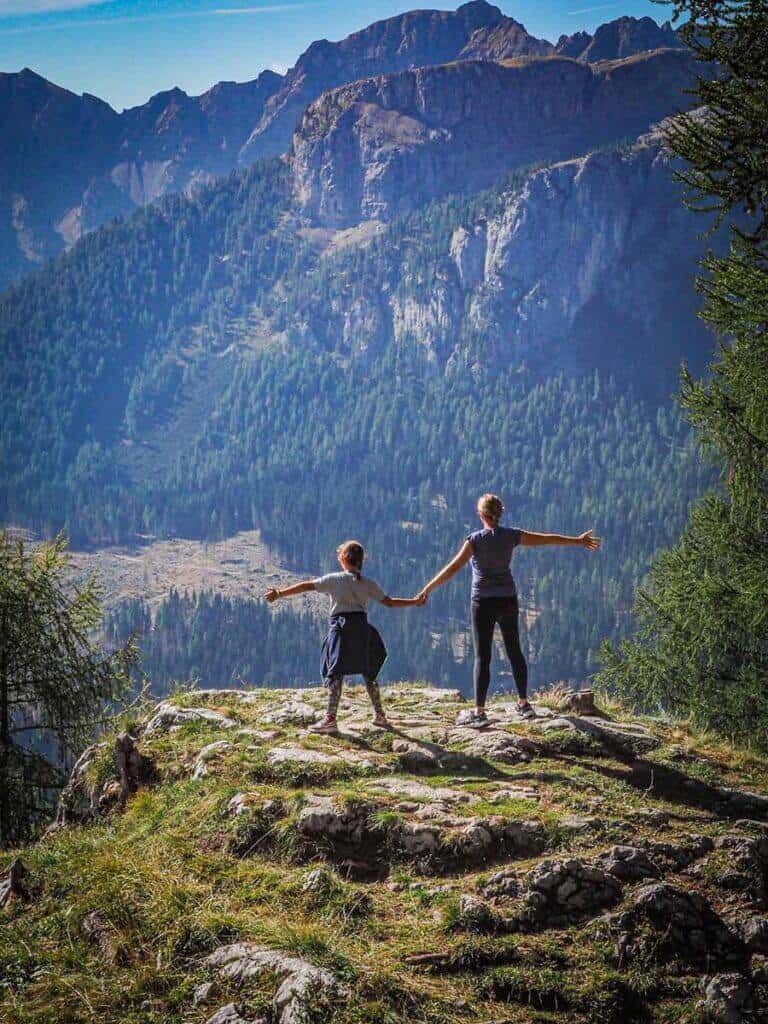
The Dolomiti Bellunesi National Park in Northern Italy is truly beautiful. This place might have converted us into mountain people (we were definite beach people prior to our Italy visit). With spectacular views, and tons of kid friendly activities, I’d recommend including it on your Italy itinerary.
Travel south in your campervan, and you can discover the Gargano National Park. Stunning beaches, forests, and mountains are just a some of the sights in this protected area.
Basing yourself if central Italy then stop by the National Park of Abruzzo. It’s a great place to hike.
Finally, if you are in the South of Italy, don’t miss Mount Etna National Park in Sicily. There is an option to hike to the crater or take a cable car.
Italy’s Coastline, Lakes, and Rivers
Taking a campervan trip though Italy gives you a huge amount of choice, and if you love it, then stay a little longer, and if it’s not for you, pack up and move on.
The blue waters and white sand of the Gulf of Orosei in Sardinia are a popular beach choice. The coastline of Bari and the Gulf are Baratti are much quieter beach destinations too.
On our north Italy Campervan trip we visited the lakes of Como and Iseo but you could also check out the more famous (and busier), Lake Garda, and Lake Maggiore. The country’s center also has the supposedly magical mountain lake of Karersee.
Northern Italy: Lakes, Mountains, and Villages
Milan
What to Do: Visit the Duomo, Sforza Castle, and the Leonardo da Vinci Museum of Science and Technology.
Parking Tip: Use campsites near Monza or San Giuliano Milanese and take public transport into the city.
Lake Maggiore
What to Do: Take a boat trip to Isola Bella or visit the botanical gardens.
Parking Tip: Look for lakeside campsites
Dolomites
What to Do: Try family-friendly hikes like Lago di Braies or visit alpine villages such as Ortisei..
Turin
What to Do: Explore the National Cinema Museum and Mole Antonelliana, or walk around Piazza Castello.
Parking Tip: Park outside the city and use public transport to reach the center.
Lake Garda
What to Do: Spend time at Gardaland amusement park or enjoy beaches in towns like Sirmione.
Trieste
What to Do: Visit Miramare Castle or stroll along the waterfront.
Parking Tip: Park in Sistiana and use buses to reach the city.
Central Italy: Renaissance Cities and Tuscan Hills
Venice
What to Do: Take a vaporetto (water bus) to explore the canals. Visit the natural history museum.
Parking Tip: Park at Fusina or Tronchetto and take water transport into the city.
Florence
What to Do: Visit the Leonardo da Vinci Museum or Boboli Gardens.
Parking Tip: Stay in Fiesole and take a bus into the city.
Siena
What to Do: Explore Piazza del Campo or enjoy a simple meal in the town.
Parking Tip: Park outside the city walls and use shuttle services.
San Gimignano
What to Do: Climb a tower for a view or try the local gelato.
Parking Tip: Park in designated campervan lots just outside town.
Rome
What to Do: Visit the Colosseum, Trevi Fountain, or Villa Borghese Gardens.
Parking Tip: Use campsites near Prima Porta and take trains into the city.
Southern Italy: Coastal Stops and Historic Sites
Amalfi Coast
What to Do: Visit towns like Amalfi or Positano.
Parking Tip: Park in Salerno or Sorrento and use buses or ferries to explore.
Matera
What to Do: Walk around the Sassi (ancient cave dwellings).
Parking Tip: Use camper stops outside the historic area.
Puglia
What to Do: Visit the Trulli houses in Alberobello or relax on the beaches in Torre Canne.
Parking Tip: Stay at campsites along the coast for easy access to beaches.
Mount Etna
What to Do: Explore the lower slopes of the volcano or visit lava caves.
Parking Tip: Stay near Nicolosi for better access to Etna.
Cefalù Beach, Sicily
What to Do: Enjoy a day at the beach or explore the town.
Parking Tip: Look for beachside campsites
General Campervan Tips
- City Parking: Many cities have campervan restrictions, so park outside and use public transport. Look for “Area di Sosta Camper” locations.
Italy in a campervan- Our two week itinerary
Milan
We began our trip in Milan, spending the first night near the airport before collecting our campervan. To avoid driving in the city at night, we stayed at an agriturismo outside Milan. It was a quiet and convenient start to the journey.
Lake Como
Our next stop was Lake Como, where we stayed at Camping Spiaggia. We spent two days by the lake, swimming, relaxing, and exploring nearby towns like Bellagio and Varenna. A boat ride on the lake was a fun highlight, especially for the kids.
Lake Iseo
At Lake Iseo, we stayed at Camping Cave, a great spot for outdoor activities. We tried paddleboarding and kayaking, and the kids enjoyed jumping into the lake from safe spots. A visit to Monte Isola, a peaceful island in the lake, added something special to this quieter destination. FYI the road into the campsite is a little on the tight side. I closed my eyes as we squeezed our way through, luckily I wasn’t driving.
Val di Fassa (Dolomites)
The Dolomites in Val di Fassa were a trip highlight. Camping Catinaccio Rosengarten was surrounded by beautiful mountains and plenty of family-friendly activities. We rented bikes, explored scenic trails, and rode cable cars to enjoy breathtaking views. The area also offered playgrounds and outdoor activities that kept the kids entertained.
Venice
Our final major stop was Venice, where we stayed at Camping Serenissima just outside the city. From there, we took a bus into Venice to explore. We visited St. Mark’s Basilica, the Doge’s Palace, and the Rialto Bridge, and took a ride on a vaporetto. While Venice was busy, we made sure to keep days shorter and take breaks, which worked well for the kids.
Road Conditions in Italy
Italian roads are generally well-maintained, but there are a few things to keep in mind:
- Autostrade (motorways): Fast and efficient but toll-based. Costs depend on vehicle type and distance traveled. Payments can be made by cash or card.
- Secondary roads: Offer scenic drives but can be narrow and winding, especially in mountainous regions.
- Villages: Streets can be very narrow with tight turns—plan ahead, especially with larger campervans.
- Speed limits: Vary depending on the size of your campervan. Check signage and local regulations.
- Parking:
- Blue lines: Paid parking; campervans often pay 50% more than cars.
- White lines: Free parking (sometimes requires a permit).
- Yellow lines: Reserved parking, typically not for visitors.

how to survive living in a confined space with your family
Ah, the joys of living in a confined space with your family – it was one of our main concerns vefore booking this trip.
However, there are ways to survive without someone mysteriously disappearing (although, let’s be honest, there are times when that might seem tempting).
One strategy is to establish clear boundaries – for example, the back of the campervan is designated as the “kids’ area,” while the front is for the adults.
Our main strategy was to open the door!
The good thing about the van is opening the door to whether you have decided to park and for us this usually meant green space, so the children were released to run free amongst the daisys and the daffodils to blow off some steam. But when all else fails, sometimes you just need to embrace the chaos and have a good laugh…or park at a winery!

Travel Tips for Italy in a Campervan
- Pack light: Space is limited.
- Book campsites early: Especially during peak seasons.
- Travel off-peak: Avoid traffic and enjoy quieter attractions.
- Invest in toll passes: Save time at motorway tolls with a Telepass.
- Enjoy local produce: Stock up at markets and cook in your camper.
- Use designated dump areas for grey water.
- Avoid headphones while driving and limit phone use.
- Download Google Maps for offline navigation.
What to take on your campervan trip
Sickness tablets- there are some very very windy roads and these were a life saver…after we discovered why we needed them.
Warning Triangle and High Vis vest- You should be supplied with these by your campervan rental company
Travelling Italy in a campervan in winter? You’re going to need snow chains or winter tires!
Final thoughts on Italy in a campervan
All in all, travelling in a campervan with kids is a surprisingly exciting way to explore Italy while keeping costs low and staying flexible.
Exploring Italy in a campervan was one of our absolute highlights of travelling.
Firstly, we enjoyed travelling in a campervan, the freedom it gives for exploring is amazing but also it encouraged us to spend more time outside.
Secondly, Italy, wow! We knew Italy was nice but we were blown away by the beauty of the Dolomites, by the tastiness of the food and the kindness of strangers.
Can you park a campervan anywhere in Italy?
No, wild camping is restricted in most areas. Stick to designated campervan spots or campsites unless you are willing to take the risk of being moved on in the night.
What do I need to drive a campervan in Italy?
An International Driving Permit (IDP) is required for non-EU drivers. Insurance- 3rd party minimum and vehicle registration document.
Do the kids need to use a car seat in Italy?
For kids under 1m50cm or 36kg a car seat is needed.
How long should I plan for a campervan trip in Italy?
If you plan to explore just one area, a week to 10 days should be enough, but stay as long as you can.

Our Favourite family planning tools
- Booking.com – The best all-around accommodation booking site with the widest selection of budget accommodation. It’s easy to filter and sort into price and availability.
- Skyscanner– This is by far our favourite flight search engine. They are able to search small websites and budget airlines that larger search sites often miss.
- Kiwi– We use Kiwi for our destination inspiration, and to help find those routes which are a little cheaper. It has a very flexible search option for finding flights.
- GetYourGuide– Get Your Guide is the place to go for tours and excursions offered all around the world including everything from walking tours, to street-food tours, cooking classes, desert safari’s and more!
- SafetyWing – A great travel insurance option that offers load of flexibility.
- Genki – Travel insurance tailored for longterm travel, gap years and digital nomads (including those who have already left home).
- Wise– Our go to for all international spending and transfers. Get a fee free transfer of 500GBP with our link
- ESim– We always set up an esim for arrival into a country to help navigate our way around.
- Discover Cars– Our go to for rentals, internationally. We always find the best deals here
- 12go– Our go to for booking buses, trains, coaches and boats
- TravelSpend– Helps us to keep track of our budget
- The Adventure of a Lifetime – Why Travelling with Kids is Worth the Effort

- Ultimate Budget Tips for Family Travel – A Guide to More Travel for Less
- Family Adventures in Venice: A 48-Hour Budget-Friendly Itinerary
- Conquer the Acropolis: Family-Friendly Tips for an Epic Adventure

- Plan an Awesome 48 hours in Athens with kids

- Exploring Edinburgh on a Shoestring Budget with Kids: A 48-Hour Itinerary